How to Build and Improve Your Product Analytics Strategy - A Practical Guide


Define a concise core metric set and tie product behavior to outcomes. Map events such as signups, activations, purchases, and retention to business goals so the views you build surface valuable signals at a glance. Use validation rules to catch data gaps and avoid poor data quality that blinds decisions. Additionally, align the team around the importance of measuring impact and use measure to track progress, not vanity metrics. Additionally, consider aligning experiments into a small backlog to test next and record results in a shared document to reinforce learning.
In practice, implement a cadence that fits your product: weekly views for fast feedback and monthly deep-dives for validation. Focus on cohorts to surface behavior changes and to spot inefficiencies in onboarding or checkout. use innovation with small experiments, and measure their impact on conversion and retention. This approach emphasizes focusing on early engagement and prevents data gaps from slowing decisions.
Build a disciplined data flow so teams can do analytics without friction. Create a lightweight pipeline that collects events easily from the product, with a consistent core schema and time zone rules. Define data ownership, implement validation checks that flag anomalies, and monitor data latency so dashboards stay fresh. When some teams are doing analytics in isolation, you miss cross‑channel insights; a shared data layer reveals how different touchpoints connect and where inefficiencies accumulate.
Prioritize experiments with a simple scoring model: impact, confidence, and effort drive the shortlist. Build views that reflect cross‑functional goals and tie experiments to measurable outcomes. Start with a few quick wins to reduce inefficiencies in onboarding, checkout, or discovery, and track progress with concrete numbers for each iteration. Use leveraging to describe how new data sources or tools amplify results, and keep a running log of lessons learned for ongoing improvement.
Product Analytics Strategy: Practical Guide Overview
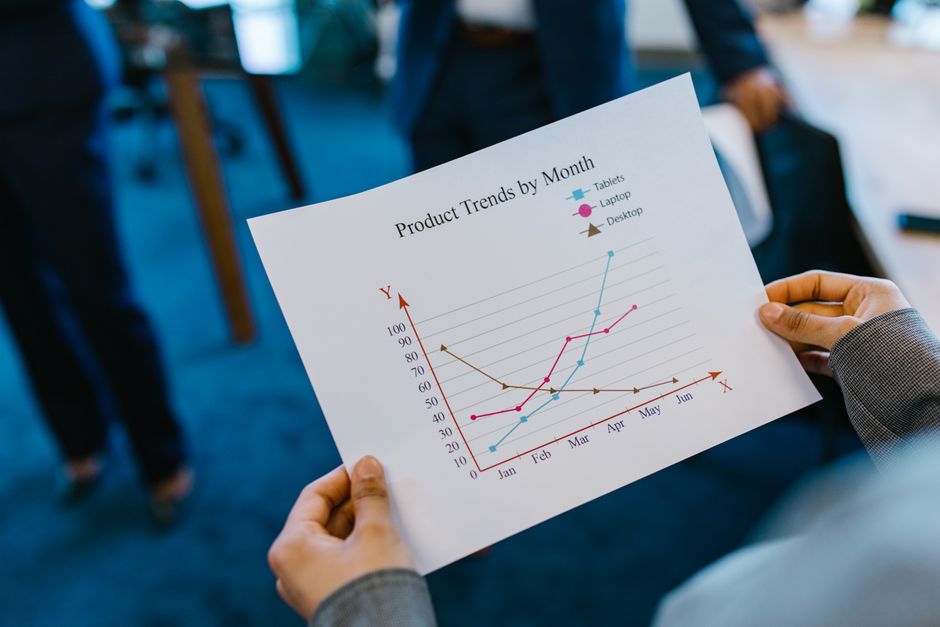
Start with a concrete recommendation: identify five core interactions and wire them to Mixpanel to capture data within 24 hours. This quick setup addresses data gaps, enables addressing critical issues, and helps leadership act on growth signals.
Define five core interactions: page views, onboarding steps,
- Define five core interactions: page views, onboarding steps, feature usage, billing events (plan changes, invoices), and renewal checks. This mix shows how users derive value and where friction appears, laying the groundwork for profitability insights.
- Instrument and capture: implement event tracking in Mixpanel with user_id, timestamp, and contextual properties to ensure the flow of data is reliable. This setup excels at turning raw events into actionable insights and supports cross‑team decisions.
- Build a four‑dashboard suite: (a) profitability and revenue trends, (b) onboarding and activation flow, (c) billing lifecycle and churn indicators, (d) advertising ROI and CAC versus LTV. Each dashboard highlights different angles and a clear path to growth.
- Form hypotheses and test them: start with 4–6 hypotheses, such as “reducing onboarding steps by 20% increases activation by 12%” or “billing nudges improve renewal rate by 8%.” Track impact over a duration window of 30 days to establish early signals.
- Link analytics to business outcomes: map events to revenue, value realization, and profitability. Use the data to justify pricing tweaks, feature adjustments, or onboarding changes that directly affect margin and growth.
- Establish a concise leadership flow: share weekly updates that show progress on hypothesis tests, key metrics, and risk indicators. A clear flow maintains accountability and speeds decision‑making.
- Addressing data quality and gaps: implement data validation checks, monitor for missing attributes, and set escalation when capture drops below target levels. This prevents a lack of visibility and helps sustain trust in insights.
- Operationalize findings into experiments: translate dashboards into actionable experiments, assign owners, and target wins in billing, onboarding, or feature adoption. The goal is measurable improvement that shows up in profitability and growth metrics.
- Focus on different user segments: segment by plan, region, and usage intensity to reveal where interventions are most effective. Segment insights avoid one‑size‑fits‑all decisions and drive more precise product work.
- Enable data‑driven prioritization: use a simple scoring model that weighs potential impact on profitability, duration of effect, and feasibility. This helps leadership choose the next high‑value bets and keeps optimization momentum.
In practice, this approach enhances clarity, aligns teams around the same hypotheses, and creates a reliable cadence of learning. It shows how to capture and interpret interactions, use Mixpanel for fast signal extraction, and drive ongoing growth without overhauling your analytics stack.
Define measurable goals and success criteria
Start with 3-5 specific goals that align with market needs and strategic priorities. Each goal describes a tangible outcome and carries a duration window (for example, 90 days) to drive accountability. For analyzing progress, present clear success criteria with a baseline, a target, and a defined measurement cadence. State what you will solve for and how you will know when you have solved it, so teams can act on insights.
Maps each goal to critical points in the user journey–onboarding, activation, retention–so you can see how activity contributes to outcomes. Present the results on several dashboards to cover acquisition, activation, monetization, and retention, while addressing customer needs and business goals. Define data sources, allocate resources, and assign management ownership to support the creation and ongoing maintenance of reliable measurements. Back decisions with credible data.
Set a regular review cadence and assign owners for each goal. Produce concrete action points from every review to drive improving changes in product and marketing. Keep metric definitions stable for the duration of the goal to maintain comparability, while allowing updates when data fidelity requires it.
Benchmark against competitor signals and market trends to calibrate ambition and enhance product-market fit. Let these inputs inform prioritization and help you maintain a strategic, data-driven approach across product, analytics, and management processes.
Inventory data sources: events, properties, and data quality checks
Start by building a practical inventory of data sources that feed product analytics: catalog the events and the properties that describe them, and design data quality checks you can automate. This current setup keeps the flow aligned with business terms and makes it easy to analyze across channels.
Events focus on the ones that drive decisions: page_view, view_item, add_to_cart, begin_checkout, and purchase. Use consistent naming, attach an order_id where relevant, and ensure each event carries at least a timestamp and a unique event_id to support correllation and later charts. This approach helps you capture the core journey and the traffic that moves users through the funnel.
Properties describe context for each event: product_id, product_name, category, price, currency, quantity, user_id, session_id, and referral or traffic_source. Align properties with business terms so data analysts can analyse trends without guessing, and keep product-level attributes available for cohort and pricing experiments. Linking google and moesifs data streams through UserPilot enriches the signal and makes the flow easier to interpret.
Data quality checks ground reliability: check completeness of key fields, validity of values (price > 0, currency codes, non-null IDs), timeliness (timestamps within a defined window), and uniqueness to prevent double counting. Implement schema validation at capture, plus cross-source reconciliation to ensure one purchase corresponds to the same order across analytics tools.
To operationalize quality, automate alerts for drift, missing fields, or outliers, and maintain a single source of truth where possible. Provide clear guardrails for handling out-of-range values and ensure you continue refining checks as you onboard new data sources. This practice supports informed decision-making and reduces the manual overhead of data cleaning, enabling teams to analyse more confidently and act faster.
| Source | What to capture | Quality checks | Tools / Notes |
|---|---|---|---|
| Events | core actions: page_view, view_item, add_to_cart, begin_checkout, purchase; fields like event_name, timestamp, order_id | non-null event_name; timestamp in ISO or UTC; unique event_id; consistent order_id across events; valid value ranges | moesifs; google; analytics; use to map funnels and traffic flow |
| Properties | product_id, product_name, category, price, currency, quantity, user_id, session_id | non-null IDs; price > 0; valid currency codes; consistent category taxonomy | moesifs; userpilot; enrich with google signals for richer context |
| Data quality checks | schema validation; deduplication; cross-source reconciliation; timeliness | schema drift alerts; duplicate detection; freshness thresholds; cross-source consistency | custom rules in your pipeline; dashboards with charts to monitor trends |
Prioritize metrics: North Star, leading indicators, and
Prioritize metrics: North Star, leading indicators, and actionable KPIs
Adopt a North Star metric that directly reflects customer value and keep it simple and measurable. A dedicated manager owns the metric, and onboarding includes training on how the metric guides decisions. Build robust analytics with high-quality data access to their dashboards, enabling the team to monitor the North Star, several leading indicators, and actionable KPIs together, preventing misalignment and supporting their day-to-day work. Use this framework to ensure customers see consistent value and the companys strategy stays aligned with product outcomes.
Choose leading indicators that look ahead to changes in the North Star within a short horizon. Pick several signals such as activation after onboarding, engagement depth, and feature adoption rates. Look across cohorts by clustering users by onboarding channel and behavior to surface insights, leveraging analytics to identify at-risk segments and allocate resources accordingly.
Define actionable KPIs with clear targets, a data source, a responsible owner, and an explicit action plan. Examples include onboarding completion rate, time-to-first-value, weekly active users performing core actions, and rising risk scores for at-risk customers. Align each KPI with features to measure and with the North Star to ensure a cohesive story. Provide access to dashboards and alerts to their teams, so they can react quickly and drive improvements that support their outcomes and customer engagement.
Establish an ongoing governance rhythm for reviews–weekly for product and analytics leads, monthly for executives–and refine metrics as hypotheses evolve. Launching experiments and tests, track results, and adjust priorities accordingly. Rely on data and prevent misinterpretations, companys can scale analytics while keeping a sharp focus on customers and the risks they manage.
Instrumentation plan: event taxonomy, naming conventions, and privacy controls
Make the event taxonomy and naming conventions the foundation of your analytics effort to ensure reliability across websites and platforms. With this base, you can monitor engagement and preserve data integrity from the outset.
-
Event taxonomy design
Choose three layers: core actions, engagement signals, and system events. Core events reflect direct user steps such as session_start, visit_homepage, search_execute, add_to_cart, and purchase. Engagement signals measure how users interact with your offering, e.g., video_play, scroll_depth, share_click, and repeat_visit. System events track performance and health, such as page_load_latency, request_error, and token_refresh. Create a maps document that links each event to stage metrics and to touchpoints in your platform. This ensures analytics resources remain aligned with major business goals and provide a single source of truth for every website and app.
-
Naming conventions
Adopt a consistent verb-noun scheme, with environment and version suffixes. Examples: visit_homepage_v1_prod, click_offer_card_v3_prod, signup_complete_v2_prod. Use snake_case, avoid spaces, and keep event names stable across releases. For events tied to a particular offering, prefix with the offering tag, and store optional metadata in a separate field in the data layer to enrich context without breaking core metrics. Maintain a central glossary in your platform resources so product, analytics, and engineering teams present the same language.
-
Privacy controls and governance
Publish a data map that identifies PII, PII-like data, and non-identifying attributes. Apply data minimization: collect only what supports decision-making, and use tokenization or hashing for identifiers. Enforce retention windows for analytics data and build a clear process for deletion requests from users. Implement role-based access to analytics resources, and separate sensitive data from standard event streams. Ensure consent signals flow into the instrumentation layer, and provide a direct option for users to opt out of analytics at the platform level. This approach preserves integrity of your data while supporting proactive analytics across popular touchpoints on websites and apps.
Design actionable dashboards and self-serve reports for product teams
Plan a core set of 3–5 dashboards directly linked to defined objectives across product, growth, and leadership. Each dashboard maps to a measurable objective (activation, retention, revenue) and is accessible to cross-functional teams to synchronize priorities and actions.
Design dashboards for in-product use and self-serve reporting. Pull data from product analytics, experiments, and user feedback; maintain a single source of truth with a shared data dictionary. Creating consistent definitions and defining metric rules helps teams understand metrics and avoid misinterpretation. Use lightweight templates to speed setup and ensure intelligence is actionable, aiding decision-making rather than vanity metrics.
For each dashboard, embed explicit signals: thresholds, alerts, and drill-down paths. This aids leadership in detecting when metrics deviate and enables cross-functional teams to take timely actions. Particularly, provide a concise executive view that highlights progress toward objectives.
Prioritize adoption over surface-level usage: define an adoption target (e.g., 75% of product teams with at least monthly usage) and track it monthly, adjusting access and templates to improve adoption and impact. Most dashboards should focus on actionable signals rather than superficial counts.
Roll out in early-stage pilots in one product area, gathering feedback in a step-by-step rollout, then scale to cross-functional teams. Keep metrics aligned to objectives and update dashboards after each phase.
Lower friction with offer-ready templates, guided exploration, and role-based filters. Provide an offer of self-serve access accompanied by a concise onboarding guide and a ready-to-use sample dashboard for each role.
Integrate dashboards with data sources: product telemetry, analytics platforms, and CRM data. Build in-product connectors to reduce switching costs and ensure updates within minutes after data refresh. Provide cross-functional access while protecting sensitive data through role-based controls.
Define governance and stewardship: assign product leadership to own definitions, set data quality checks, and establish a cadence for reviewing metric definitions. Keep a living data dictionary that teams consult when creating new dashboards.
Measure adoption and decision impact: track how often teams consult dashboards, time to insight, and how insights translate into product changes. Use these signals to refine plan and reporting, with increased adoption and faster decisions.
Keep iterating: quarterly feedback from product squads informs refining one dashboard at a time, sharpening intelligence and alignment with objectives.
Establish a learning loop: experiments, A/B testing, and rapid iteration
Run a time-bound learning loop: define a clear hypothesis, execute an A/B test for 1–2 weeks, compare both variants side by side, and implement the winning change across the site. This practical approach lets you translate predictions into concrete actions, while maintaining compliance and keeping data handling simple for user decisions. Take just a few hours to prepare each experiment, then run the tests and review results with the team to decide next steps.
Design tests that yield durable learnings. Identify 2–3 hypotheses for popular entry points, then segmenting users by attributes (device, channel, or behaviours) to capture their different needs. For each test, use a control to compare results and run within a time-bound window to avoid drift. Focus on segmentation and the behaviours of each group; track kpis and use predictions to forecast impact. Identifying their drivers helps you take practical actions, apply improvements quickly, and lets you stay compliant while moving fast.
Build a lightweight analytics loop: link experiments to a dashboard that shows kpis, predictions vs actuals, and an actionable verdict (win/neutral/lose). This approach helps you understand why results occurred and which user segments were driving change. If results are inconclusive, adjust sample size or run a follow-up test with a refined hypothesis. The goal is active learning that matures the practice over time.
Operationalize the loop: create a backlog of test ideas, assign owners, and set time-bound sprints. For each test, define the hypothesis, success criteria, required data points, and a 2-week window. Use clear verdicts; if a variant performs better for a specific segment, apply the change in that segment first. This approach helps handle complexity without slowing learning, and lets ones across product areas benefit from shared insights.
Over time, this practical approach strengthens understanding of site patterns and how users behave. By applying learnings across teams, you mature your product analytics strategy. With segmentation, active experimentation, and a focus on kpis, you improve decisions in real time and keep compliance in view.
Send a brief enquiry
Describe your website, goals, audience and budget so we can discuss a proposal.


