The Essentials of Managerial Skills - Key Competencies for Effective Leadership


Recommendation: Begin with aligning responsibilities to daily tasks and pair coaching with hands-on projects to sharpen capability sets, ensuring people feel emotionally engaged and well supported.
Structure a three-level ladder: individual contributor, team lead, and operations manager – each level has defined responsibilities, metrics, and feedback loops. Equip teams with clear direction, ready-made templates, and time-bound milestones to mobilize action and transmit expectations upward.
Adopt a multi-faceted approach to decision making: different types of choices demand distinct data, risk tolerance, and communication channels. An intelligent manager relies on multiple sources and remains well informed before approving moves, ensuring alignment across teams at all times.
Mobilize resources quickly by equipping teams with practical templates, playbooks, and a type of psychological safety that enables managing experimentation. Better workflows arise when managers transmit clear expectations, provide rapid feedback, and rely on tools that consolidate learning across levels.
Clear development tracks translate into needed growth in communication, negotiation, time management, and people guidance, with milestones tied to performance reviews.
In practice, management transitions from issuing directives to shaping capacity. Each role bears measurable responsibilities: planning, coordination, risk management, stakeholder communication, and talent development. Pushing a larger horizon means focusing on talent pipelines, cross-functional collaboration, and continuous learning cycles designed to keep teams informed and moving in the direction.
To sustain growth, establish feedback loops, monitor performance at different levels, and adjust training accordingly. When managers equip themselves with practical patterns and stay emotionally connected, they become better at guiding teams through times of uncertainty and change, while stakeholders stay informed about progress and impact.
Managerial Skills for Strong Leadership
Begin by delegating high-variance tasks to capable teams, freeing time to sharpen strategy. This action yields greater influence across organisation and positively impacts outcomes.
Crucial steps to build a durable capability map:
- Identify a competency grid to spot gaps and assign tasks within each team member's range. Use clear outcomes and timelines; this approach can save weeks across projects, accelerating growth from specialists to cross-functional roles.
- Structure meetings to generate action: keep sessions concise, assign owners, and document decisions. Apply listening techniques to ensure understanding and capture feedback that informs next steps.
- Spotting opportunities to innovate: encourage small experiments, measure impact, and iterate quickly; foster a culture where lives are improved as work becomes more meaningful.
- Develop a robust organisation framework: organise resources, apply consistent metrics to monitor progress. Use a competency-based approach to build capability across teams, leading to greater resilience in industry conditions.
- From feedback to influence: cultivate open communication, recognise contributions, and link efforts to strategic goals. Positive reinforcement helps scale influence and sustain momentum.
- Grow through delegating varied tasks: provide a range of responsibilities within which employees can develop; delegating with coaching, check-ins, and targeted development to keep people engaged and committed.
Outcome indicators include faster decision cycles, reduced bottlenecks, and a stronger organisation culture where great ideas move from concept to executed action. A consistent rhythm of feedback and adaptation helps executives feel more confident and positively shapes organisation performance.
Decision Making and Problem Solving in Management
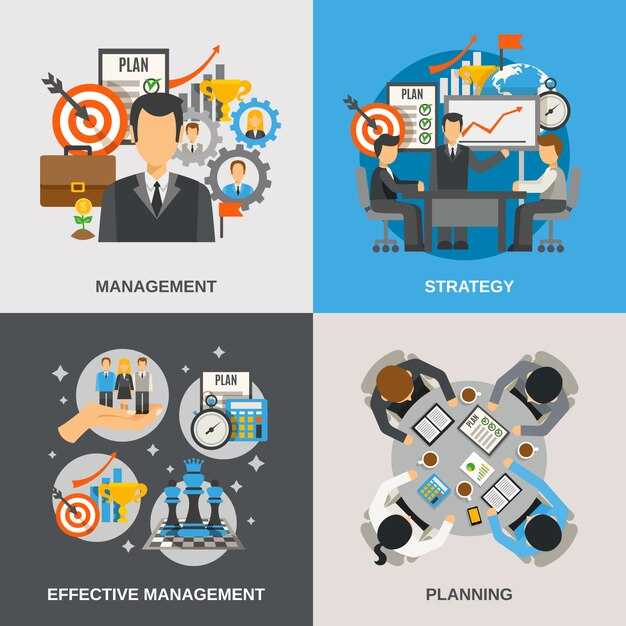
Adopt a structured decision cycle: clearly define issue, gather insights, identifying options, assess risks, select action, and monitor impact with aligned metrics.
Developing thinking patterns that handle complex problems; more impactful than micromanagement, replace with guidance that respects honesty and accountability, empowering teams without eroding ownership of outcomes.
Train teams with targeted courses and realistic simulations; practice identifying biases, rehearsing stakeholder conversations, and documenting decisions to raise impact.
Highlight competencies along with process improvements to ensure known best practices translate into daily behavior; align training with business goals to boost benefit across departments.
Remember issue follow-ups after meetings; track results, compare against baseline, and adapt strategies accordingly to sustain transformations with measurable impact.
| Stage | Actions | Evidence & Tools |
|---|---|---|
| Issue framing | state problem, gather insights, identifying constraints | issue canvas, stakeholder map |
| Option crafting | generate alternatives, assess risk, identify use points | scenario analysis, decision matrix |
| Choice & action | select winning path, assign owners, set milestones | RACI, action plan |
| Review | monitor impact, collect feedback, adjust | KPIs, dashboards |
Problem Definition: Clarify the Issue, Goals, and Constraints
Define issue in a single sentence and formalize high-level goals within 24 hours; document constraints that shape options, focusing on root causes behind current results. Give this priority during kickoff to align teams, matters toward profitable projects and larger initiatives.
Regularly perform self-assessment to verify assumptions, read stakeholder input, and recognize when situational factors demand adaptation. Structure planning around a vital backbone, supporting various initiatives, with high-level aims and certain constraints that remain stable.
Identify particular decision points and set control checkpoints; apply hybrid structuring to balance speed with accountability. Delegating roles must align with team capabilities, while readouts stay concise to remain consistent across diverse projects.
Asking precise questions keeps momentum and positively influences outcomes. Remain flexible while recognizing root issues and adapt plans as needed.
Choosing a Decision-Making Approach: Rational, Intuition, or a Hybrid
Adopt a blended decision-making model that pairs rational analysis with disciplined intuition. A developing framework helps place emphasis on data, scenario testing, and pattern recognition. Begin with a simple sequence: define the problem, gather evidence, generate options, and implement what is most likely to drive value. Regularly revisit assumptions to curb bias and keep the process honest. A kind of problem clearly informs which path fits best.
Whether context is stable or turbulent, critical decisions require calm, active engagement from members, with clear roles. Here, decision-making becomes a living capability that develops with experience, and aligns with demand from customers and operations. Theyre likely to turn toward data-informed options when root causes are understood and the blended approach is rooted in regularly collected feedback, yielding good alignment. Companies benefit when members see a clear difference between intuition and evidence, and when willingness to adapt rises, motivating members. To implement competency, train leaders and peers to stay calm while guiding others through decision-making steps. Turn key decisions into repeatable routines with documented outcomes to support future choices. Place emphasis on the kind of problem, and calibrate the mix: more rational when data is solid, more intuitive when speed matters. In this approach, participants regularly develop a clear sense of their role and the life of the organization.
Data Gathering and Analysis: Sources, Methods, and Quality Checks

Begin with a single, verifiable data source and gradually expand to a bigger variety of inputs to ensure reliability across workflows.
Sources span internal systems such as ERP, CRM, HRIS; external benchmarks; and direct employee input via surveys, interviews, and open writing tasks.
Adopt blended, mixed-methods approaches that combine dashboards, KPIs, and trend analyses with qualitative notes from mentoring conversations to assist in identifying issue patterns, which informs planning and leadership decisions.
Quality checks include validation against source metadata, completeness and accuracy metrics, timeliness, and consistency tests; triangulate across data sets, including those from external benchmarks and internal logs, maintain audit trails, and enforce data versioning to support management accountability and patient validation cycles.
Before analysis, align definitions, unit of analysis, and sampling frames; create a written data dictionary and a lightweight quality checklist; always highlight critical fields and ensure data security and privacy compliance.
Assign a data steward to manage lineage and access controls, ensuring accountability across teams.
Open dialogue with member groups, embracing mentoring and patient listening, shows willingness to communicate, which is about creating value in ways that inspire leader growth; thats a practical example of how blended inputs elevate management practice.
Always document decisions and map writing outputs into planning calendars with follow-up metrics that track bigger, tangible outcomes across management layers and reinforce shared values.
Generating and Evaluating Alternatives: Criteria, Trade-offs, and Ranking
Identify core objectives first and map alternatives against them using a simple scoring framework. This approach supports managers in making positive, data-driven choices within organisational settings, yielding better results and clear accountability.
- Define criteria and weights: impact, feasibility, cost, risk, time horizon, and alignment with organisational strategy. Use a 0–5 scale and attach explicit weights to emphasize priorities.
- Generate options: collect many potential paths from across functions, including direct actions, process changes, and collaboration models. Within a case study, include both incremental improvements and bold shifts, and use asking questions to surface hidden costs.
- Evaluate options: rate each against criteria on a consistent scale. Incorporate empirical data (costs, durations, ROI) and qualitative signals (empathy from stakeholders, willingness to support, potential to lead change). Ensure a common rubric that supports honing skills and transmit rationale to team members. Case studies show some managers born with strong empathy become proficient more quickly. Ensure scoring remains free from bias.
- Analyze trade-offs: compare top contenders to reveal how faster implementation competes with higher quality, greater reliability, or increased risk. Document non‑monetary benefits such as capability build, cultural alignment, and stakeholder buy‑in.
- Rank options: compute a composite score, supplement with scenario checks, and confirm alignment with case objectives. Some steps in this phase ensure robust ranking, highlighting best path, some options closely matched, and others clearly weaker.
- Decide and communicate: select the best option, assign ownership to a member or small cross‑functional team, and transmit expectations clearly. Ensure supporting resources are available and set milestones to monitor progress.
- Monitor and adapt: track results using dynamic indicators, solicit ongoing feedback, and hone steps as circumstances change. This cycle will help managers become proficient and lead teams with confidence, sustaining momentum.
Implementation, Monitoring, and Learning: Close the Loop and Improve
Launch a closed-loop cycle: set 4-5 outcome indicators, assign responsibility, and gather data in real time to guide adjustments.
Keep growth steady by tying activities to long-term aims and tracking acquired capabilities. In complex environments, patience matters as mobilizing teams toward shared goals unfolds. Establish clear checkpoints and preserve resilience amid setbacks.
Spotting deviations relies on lean dashboards that surface key signals; monthly reviews ensure accountability and learning progress. This cadence helps teams learn and progress. Ensuring timely feedback accelerates problem-solving and honing development across members, supporting todays workplaces.
Learn by turning acquired insights into new practices. some experiments, some interventions, and some iterations build resilience. author notes spotting patterns, refining problem-solving routines, and honing development activities that inspire others to grow.
Build a compact playbook of activities your team can run weekly: check-ins, quick retros, micro-experiments, and learning circles. mobilizing members around developing capabilities keeps lives of teams active, while responsibility rests with leaders to implement resources, schedules, and support that align with long-term aims.
Results compound when feedback loops stay crisp: measure impact, recalibrate priorities, and keep your organization learning. Development activity no longer ends at training; it becomes daily practice that sustains growth in todays workplaces and beyond.
Related Articles
subscribe
Stay in the loop
Get new articles on AI, growth, and B2B strategy — no noise.