Palkittuja SEO- ja maksetun median tapaustutkimuksia: Käytännönläheisiä, tietopohjaisia oppitunteja kasvuun


Moderni SEO ja maksettu media menestyvät, kun molemmat kanavat toimivat yhtenä järjestelmänä. Korkean aikomuksen avainsanat, linjassa olevat tiimit, puhtaat analytiikat ja johdonmukainen testaus muodostavat perustan ennakoitavissa oleville nousuille rekisteröitymisissä, muuntumisissa ja tuotoissa. Kymmenien kampanjoiden yli – vähittäiskauppiaista lääkemerkeille ja kansallisiin ketjuihin – sama periaate pitää paikkansa: kurinalainen toteutus voittaa arvauksen aina.
Tämä kokoelma todellisista tapaustutkimuksista osoittaa, miten strukturoitu suunnittelu, tiimien välinen yhteistyö ja selkeä mittaaminen kiihdyttävät suorituskykyä. Tutkimukset sisältävät SEO-tarkastuksia, kansainvälistä laajentumista, sivunopeusoptimointia, paikallisia SEO-runkoja, attribuutiokuntia ja maksetun median allokointimalleja. Jokainen esimerkki tarjoaa toimivia vaiheita, joita tiimit voivat käyttää välittömästi.
1. Miten SEO:n ja maksetun median välinen linjaus ajaa kasvua
Yksinkertainen, toistettava kehys on monien palkittujen kampanjoiden takana:
- Kartuta kohdeyleisön segmentit, avainsanat ja ostajavaiheet.
- Linjassa SEO- ja maksetun median tiimit yhteisten tavoitteiden ympärillä, kuten rekisteröitymiset tai tuotot.
- Seuraa HubSpot-tapahtumia yhdistääksesi käyttäjäkäyttäytymisen suppilon etenemiseen.
- Käytä kevyttä attribuutiolaajennusta yhtenäistämään raportointia.
- Keskity korkean aikomuksen avainsanoihin ja mainosryhmiin, ei määrään sen itsensä vuoksi.
Viimeaikaisessa täyden suppilon toteutuksessa tämä menetelmä tuotti:
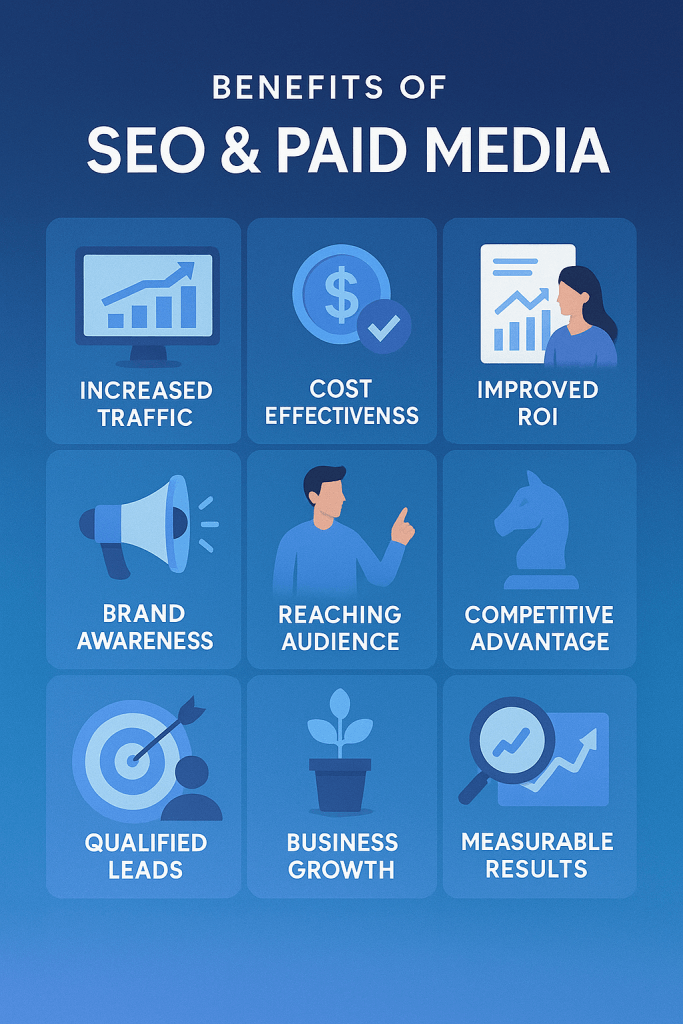
- +28 % rekisteröitymisissä 90 päivässä
- –22 % kustannus per rekisteröityminen
Syy on yksinkertainen: kun data muuttuu keskittyneiksi toimiksi, jokainen kanava vahvistaa muita.
2. Kahdeksantoista ensihenkilön SEO-tapaustutkimusta: Taktiikat ja oivallukset
Tapaus 1 — Sisällön ja muuntumissignaalien tiivistäminen
90 päivän rytmi huippulaskeutumissivuilla linjasi aikomuksen toimintaan. Strukturoitu data ja parempi sivukartoitus nostivat ydinkuuntumuvauhtia kaksinkertaisilla luvuilla.
Tapaus 2 — Kategorioiden uudelleenrakentaminen vähittäiskauppiaille
Yhteistyössä Kanadassa sijaitsevan vähittäiskaupparyhmän kanssa kategorioiden uudelleenrakentaminen plus ostajajohtoiset blogit leikkasivat pompun 18 %:lla ja nostivat orgaanista tuottoa 26 %:lla.
Tapaus 3 — Kansainväliset SEO-parannukset
Hreflang, paikallistettu sisältö ja parannettu skeema nostivat brändittömän kansainvälisen liikenteen 22 %:lla, erityisesti korkean aikomuksen tuotesivuilla.
Tapaus 4 — Mobiilinopeusoptimointi
Sivun painon vähentäminen 40 %:lla puolitti mobiililatausajat ja lisäsi muuntumisia 11 %:lla.
Tapaus 5 — Blogi-tuotesynergia
Sekoitettu sisältömalli tuotti 19 %:n nousun orgaanisissa vierailuissa tuotesivuilla ja vahvempaa keskisuppilon viipyilyä.
Tapaus 6 — Analytiikkajohtoinen sivulla-toteutus
Viikoittaiset datasignaalit paransivat sisäisiä linkityksiä ja vähensivät kitkaa, nostaen avustetut muuntumiset 15 %:lla.
Tapaus 7 — Ostoskorin hylkäämisen vähentäminen
Poistumisaikomuksen kehotteet, palvelinpuolen renderöinti ja kassanopeus johtivat 9 %:n pudotukseen hylkäämisissä ja 12 %:n nousuun tapahtumissa.
Tapaus 8 — Blogin kiihdyttäminen lanseerauksille
Strukturoitu data ja nopeampi indeksointi lisäsivät sijoitusmomenttia, blogijohtoiset sessiot nousivat 28 %:lla.
Tapaus 9 — Skaalautuva arkkitehtuuri laajentumiseen
Puhdasm pi navigointi ja mallit nostivat avainsanapeittoa huippukategorioille 33 %:lla.
Tapaus 10 — Pitkähäntäsisällön rytmi
Ohjatut artikkelit paransivat pitkähäntä näkyvyyttä ja nostivat ohjattuja muuntumisia 24 %:lla.
Tapaus 11 — Tekninen sprintti Kanadan markkinoille
Laiska lataus ja kriittinen CSS leikkasivat taitoksen yläpuolisen viiveen 1,2 s:lla ja nostivat sitoutumista 16 %:lla.
Tapaus 12 — Strukturoidun datan parannukset
Parannettu tuoteskeema lisäsi CTR:ää 14 %:lla ja tuottoa sivua kohden 8 %:lla.
Tapaus 13 — Aiheklusterit vähittäiskauppablogeille
Klustereiden virkistäminen paransi korkean aikomuksen orgaanista liikennettä 21 %:lla ja laajensi avainsanaosuutta äänestä.
Tapaus 14 — Yhdistetty kauppias-toiminnot + analytiikkalähestymistapa
Parannukset nostivat muuntumisvauhtia ja lisäsivät kategorian tuottoa 17 %:lla.
Tapaus 15 — Kausittainen päivityssykli
Nopeampi tuotanto leikkasi julkaisuaikaan 40 %:lla ja paransi kausittaisia laskeutumismuuntumisia 12 %:lla.
Tapaus 16 — Duplikaattisisällön puhdistus
Kanoniset strategiat leikkasivat ryömijähukkaa 22 %:lla ja paransivat indeksipeittoa.
Tapaus 17 — Blogin integrointi vähittäiskauppaverkostoille
Kouluttava sisältö sekoitettuna kategorioihin tuotti 26 %:n nousun sessiosyvyydessä ja 9 %:n nousun ristikutsuissa.
Tapaus 18 — SEO:n upottaminen toimintoihin
Toiminnallinen linjaus tuotti jatkuvia sijoitus- ja muuntumiskerroksia koko salkun yli.

3. Tapaussarja A — Avainsanatutkimus ja sisältölinjaus (4 tutkimusta)
Tutkimus 1 — Hääverkkokaupan avainsanasprintti
Kompakti sprintti kartutti 50 termiä sivuille. Nopeat tunniste- ja sisälinkkipäivitykset jälkeen:
- Orgaaniset sessiot: +28 %
- Muuntumiset: +9 %
- Keskimääräinen sijoitus parani 12 → 6
Tutkimus 2 — Sisältöhub-strategia
Neljä pilari-sivua + 12 tukea-artikkelia lisäsi hubin sitoutumista, pitkähäntäliikennettä (+35 %) ja tuottoa linkituotteista.
Tutkimus 3 — Sivulla-korjausten flywheel
Sivuston virheiden korjaaminen ja otsikoiden/meta-kuvausten päivittäminen paransi CTR:ää jopa 15 %:lla ja työnsi neljä sivua top-5-sijoituksiin.
Tutkimus 4 — Demografinen kohdentaminen
Aluekohtaiset sivut ja optimoitu tuoteteksti nostivat kohdennetut muuntumisvauhdit 12 %:lla ja lisäsivät AOV:ta 6 %:lla.
4. Tapaussarja B — Sivulla ja tekninen SEO (5 tutkimusta)
Tutkimus 1 — Sivulla-päivitys kategorialuokille
40 optimoitua otsikkotunnistetta ja JS-viivästys lisäsi CTR:ää 18 %:lla ja vähensi LCP:tä 3,9 s:sta 2,6 s:aan.
Tutkimus 2 — Sisältö linjassa aikomuksen kanssa
12 uutta UKK:ta ja opasta nosti viipyilyajan 24 %:lla ja paransi sijoitusta 15 pitkähäntätermille.
Tutkimus 3 — Tekninen selkäranka ja navigointi
Kanoni-korjaukset, skeema-päivitykset ja laiska lataus vähensivät LCP:tä 2,3 s:aan ja paransivat indeksipeittoa 28 %:lla.
Tutkimus 4 — Linkkirakennusohjelma
14 ansaittua editoriaalista linkkiä lisäsi viittausliikennettä 28 %:lla ja ylläpiti sijoitusmomenttia.
Tutkimus 5 — Lääketieteellinen sisältö virtuaalihoitoon
Moduulimaiset lääketieteelliset oppaat nostivat orgaaniset vierailut 23 %:lla ja vähensivät pomppua 8 pisteellä.
5. Tapaussarja C — Paikallinen SEO + maksettu media (3 tutkimusta)
Tapaus 1 — Suburban vähittäiskauppias
Paikallinen paketti parani sijalta 7 → 2; jalkaliikenne nousi 12 %:lla ja tuotto per myymälä +22 %.
Tapaus 2 — Paikallinen verkkokauppamainonta
Hinta-säteellä plus kaupungin tasoiset laskeutumissivut laskivat CPC:tä 14 %:lla ja lisäsivät paikallisia muuntumisia 19 %:lla.
Tapaus 3 — Kansallinen vähittäiskauppapilotti
Kolmen kaupungin käyttöönotto lisäsi saapuvia käyttäjiä 26 %:lla ja paransi myymäläavusteisia verkkotilauksia jopa 22 %:lla.
6. Tapaussarja D — Sisältökokeilut ja mittaaminen (4 tutkimusta)
Tutkimus 1 — Sisältökokeilut verkkokaupassa
Pitkät oppaat ja videot lisäsivät orgaanisia sessioita (+24 %) ja CTA-muuntumista (+12 %).
Tutkimus 2 — Editoriaaliset signaalit B2B:lle
Interaktiiviset resurssit nostivat MQL:tä 28 %:lla ja lähetyksiä 22 %:lla.
Tutkimus 3 — Yhtenäinen mittauskehys
Standardoidut GA4-tapahtumat paransivat attribuution tarkkuutta 15 %:lla ja nostivat ROI:ta 9 %:lla 60 päivässä.
Tutkimus 4 — Sisäinen vs. toimisto audit-yhteistyö
Auditin vauhti parani 30 %:lla ja optimoituja sivuja sai 18 % enemmän klikkauksia.
7. Tapaussarja E — Maksetun median allokointi ja luova testaus (2 tutkimusta)
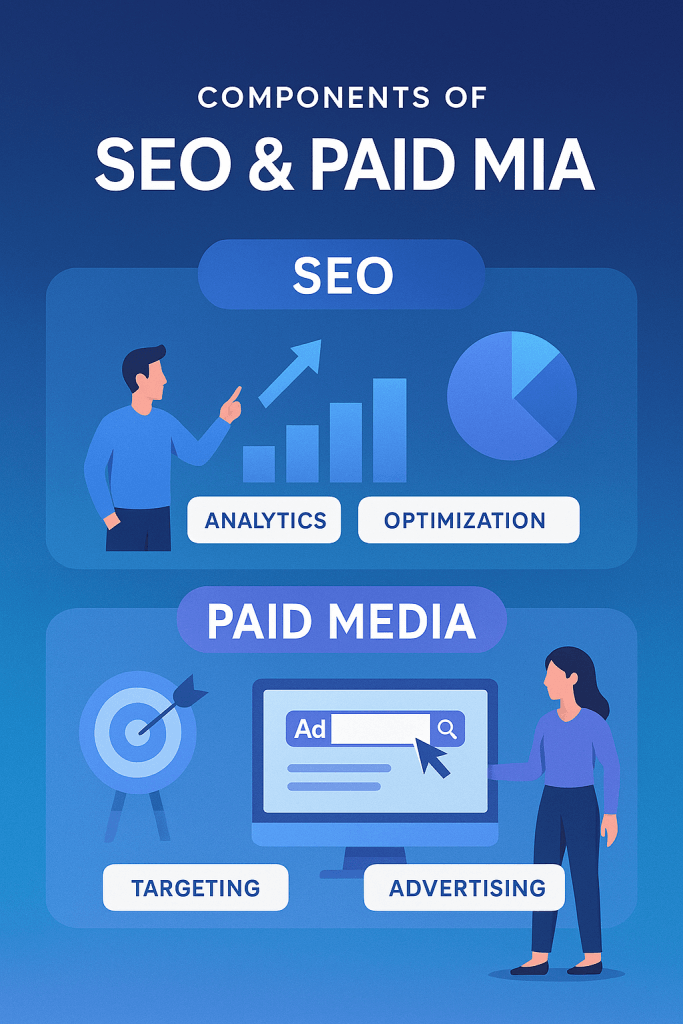
Tutkimus 1 — Allokointimalli kanadalaiselle verkkokaupalle
Budjetin jakelun siirtäminen tuotti:
- ROAS: 2,8 → 5,1
- Tilaukset: +34 %
- CPA: –21 %
Tutkimus 2 — Luova testaus + attribuutio-kurinalaisuus
12 luovan variantin testaaminen johti:
- CTR: +28 %
- CVR: +18 %
- Attribuutio-nousu: +7 pp viimeisen klikkauksen yläpuolella
Päätelmä
Koko tutkimuksissa malli nousee esiin: kurinalainen data, strukturoidut työnkulut ja linjassa olevat tiimit ylittävät johdonmukaisesti intuitioon perustuvan toteutuksen. Kun SEO, maksettu media, analytiikka ja sisältö toimivat samasta kehyksestä, kasvu muuttuu toistettavaksi ja ennakoitavaksi.
Kaiken kokoiset yritykset – keski-markkinat, yritystason, vähittäiskauppa tai lääketiede – voivat omaksua nämä järjestelmät rekisteröitymisten, muuntumisten ja asiakasarvon kiihdyttämiseksi.
📚 Lisää sosiaalisen median tilastoista
- B2B SEO -strategia 2026 - Lopullinen opas kasvuun ja ROI:hin
- Miten käyttää Google Trendsiä SEO-avainsanatutkimukseen ja kasvuun - Käytännön opas
- Reddit SEO -strategiat yrityksille vuonna 2026 - Käytännön kasvuoopas
- Miten nostaa blogiliikennettä vuonna 2026 - Todistetut SEO-strategiat kasvuun
- SaaS SEO yrityksille - Lopullinen kasvuoopas
Lähetä lyhyt tiedustelu
Kuvaile sivusto, tavoitteet, kohderyhmä ja budjetti tarjousta varten.


