5 Ways to Reduce Cost Per Lead (CPL) in Google Ads

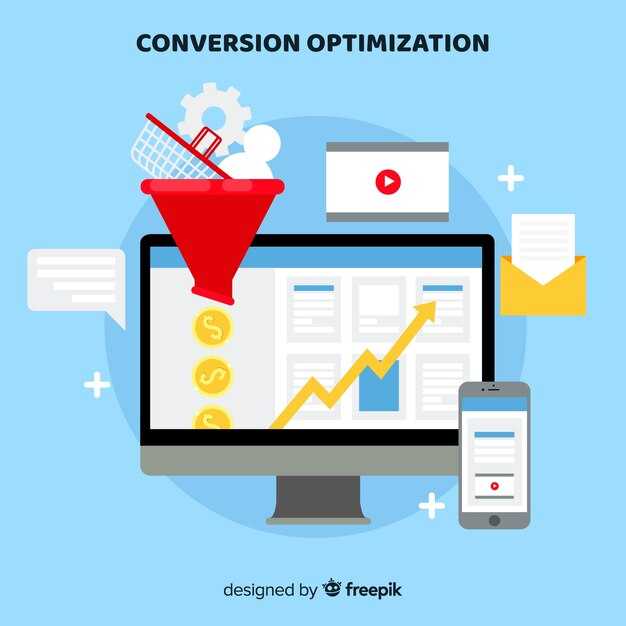
Start by optimizing your landing page to boost conversions and reduce CPL. A fast, focused landing experience raises quality scores, cuts wasted spending, and increases the share of visitors who fill a form. For educators and businesses alike, the message should match the ad copy within seconds, so users clicked the ad and then saw the same value on landing after a quick scroll.
Then tighten targeting and control spending with precise negative keywords and query analysis. Use the search terms report to add negative keywords, prune broad-match waste, and maintain the necessary reach without blowing CPL. After implementing these tweaks, you’ll see higher relevance, lower cost per click, and more qualified clicks.
Then test messaging and creative variants to raise the share of high-intent inquiries. Run small A/B tests on headlines, subheads, and form fields, measuring impact on conversions. Often a 2-3 point lift comes from tightening the value proposition on the landing page and ensuring the copy matches users’ query and such intent. Educators and businesses in the same niche often see gains when the form remains simple, while the page remains focused on the benefit.
Then use ad extensions and bidding strategies to bridge ads and landing pages. Use sitelinks, callouts, and structured snippets to surface the most relevant benefits, while keeping the page focused. Popular tactics include aligning bid modifiers with device performance and using CPA-based goals to guide bidding; maybe you'll see a 15-25% CPL reduction in the first month, and you can scale spending with confidence after confirming the results.
Stay accountable with a simple, repeatable measurement cadence. After each test, compare CPL, conversions, and total spending, and keep the same goal across campaigns to learn what works. Educators and marketers in popular verticals often adopt a weekly review to catch drops in performance and adjust quickly.
Refine keyword targeting with exact-match and negative keywords to cut CPL
Use exact-match keywords for your core terms and build a tight negative keyword list to filter out low-intent searches. This keeps bidding focused on terms that install and convert, reducing CPL while preserving volume. Keep your negatives refreshed and add around 15-20 terms when you run a new test.
Structure matters: place high-intent terms in their own ad groups, keep exact-match for those terms, and attach a precise negative set to block around ambiguous queries. For driving terms that lead to install and convert events, cap bidding with a small margin to protect your CPL while you iterate. Keep the focus on relevant terms to avoid wasteful clicks.
Base decisions on historical data: pull the last 60 days of performance, remove underperforming terms from exact-match, and push them into negatives. Run 3-5 tests before you move budgets, compare scores and information, and measure how changes move your CPL and volume. Track the impact of these adjustments on your overall results.
Maintain a disciplined rhythm: weekly checks to prune new negatives, refine match types, and align with your bidding strategy. If a term shows consistent relevance, keep it exact-match; if not, convert it to negative or tuck it into a broader phrase-match with tight bid controls. This approach supports driving installs and conversions while lowering CPL. For laozhangai, share learnings across teams to sustain improvements.
Group keywords into tightly themed ad groups for higher relevance and lower CPL
Group keywords into tightly themed ad groups, each mapped to a single product, service, or user intent. This increases relevance and lowers CPL. Use a tiered structure: Tier 1 core terms, Tier 2 modifiers, and Tier 3 long-tail educational queries. Therefore, the alignment across ads, pages, and offers improves, and it generates converting traffic without noise. This approach supports achieving lower CPL and better marketing results.
Steps to implement

Define 3-5 keywords per group that align with a single intent; keep each ad group to 1-2 match types and limit to total pages per group to avoid dilution. Include an educational asset and a dedicated, included landing page for the group. Install conversion tracking to capture converting events and feed data back to the team for quick adjustments. Use options to tailor bids by tier and keyword match type, ensuring the group remains synchronized with content and pages.
Continuous optimization
Run experimental tests to compare group structures and adjust based on behavior data. Continuously monitor conversions and CPL, pausing underperforming terms and scaling those that convert well. Focus messaging on the mind of the individual buyer, matching language to behavior and the pages visited. This synchronized process keeps the team aligned and generates improved results, with well-tuned options across each tier.
Improve landing page alignment with ad messaging and faster conversion paths
Align the landing page headline with the ad copy to ensure immediate relevance and reduce friction on the first screen, then present a concise path to submit. Use a planner to map the message, pull information from your data, and ensure every element matches the goals and behavior of those visited. Then test and iterate, returning to improvements as you collect data.
Messaging alignment and friction reduction
- Structured content plan: map the ad headline, value props, and bullets to the page sections so the match is seamless for every visitor. Use the planner to maintain consistency across information and goals.
- Evaluate top variants: borrow language from popular ads and apply it to the hero and bullets, keeping the behavior of visited users in mind and reducing cognitive load at the first touchpoint.
- Minimize form friction before submit: hide nonessential fields, enable auto-fill, and offer optional details later to accelerate early conversions and improve return on ad spend.
- Implementing a two-step path: a short form first, with an optional deeper form for those who want more details; this approach supports hesitant users and speeds up the generation of leads.
- Import trust signals and social proof that align with the ad claims; use concise information that reinforces the value and lowers cost per lead for visitors who are on the fence.
- use multiple vehicles for conversion: a visible CTA, a chat shortcut, and a click-to-call option to accommodate different preferences and increase submit rates.
- Before publishing, verify that the hero image, bullets, and CTAs reflect the same language as the ads to avoid mismatch and keep visitors moving toward goals.
- Early wins: focus on a perfect balance of speed and clarity on mobile devices; fast load times reduce drop-off and improve visited-to-submission progression.
- Revolutionary elements should be deployed with caution: implement one improvement at a time and analyze impact to avoid drifting away from core messaging.
Conversion path optimization and test strategy
- Submit-focused form design: reduce fields, use inline validation, and show a confirmation immediately after submission to encourage return visits and ongoing engagement.
- Optimization loop: analyze behavior data to identify where users exit; then adjust headlines, bullets, and CTAs to better align with user intent and reduce cost per lead.
- Popular social proof and case snippets placed near the CTA can help hesitant visitors feel confident to proceed, improving submit rates.
- Recycle information gathered from visited sessions to inform content generation for subsequent pages, ensuring every page speaks to the same goals and expectations.
- Maintain page performance while adding proof elements: compress assets, optimize fonts, and use lazy loading so speed remains high as content grows.
- Monitoring and reporting: track cost, submission rate, and return visits; use the data to inform the planner and prioritize changes with the highest impact.
- Generation-focused testing: run small, controlled experiments on headlines, bullets, and form lengths; implement the winning variation and iterate again with fresh hypotheses.
- Before each test cycle, set a clear hypothesis, define success criteria, and outline a quick path to evaluate results–keeping tests practical and aligned with goals.
Boost Quality Score by enhancing ad relevance with targeted copy
Write 3-5 ad variants per ad group that mirror the exact keywords and user intent; include the top terms in headlines and descriptions to boost targeting accuracy. For laozhangai educational tools, craft copy that highlights tangible outcomes to maintain trust and clarity, so users feel prepared to click. This approach gets higher CTR and stronger ad relevance signals, driving better results.
Align copy with landing page content to boost results. Already tested benchmarks show that matching headlines to landing page sections yields higher conversions. Include detail that matches the hero claims on the page, and ensure the same keywords appear on the landing header and CTA. Maintain consistency across ad and landing experiences to improve the landing page experience component of Quality Score. Run tests with a sufficient sample: aim for 1,000+ impressions per variant and 2-week cycles to surface true differences; keep a log in a file with performance metrics and notes. Use the ones that deliver consistent gains across devices.
Develop copy for developer and family personas. For each persona, create 2-3 options that emphasize benefits tailored to that audience. This targeting improves relevance and lowers cost per lead. Include all variants included in the test and note the changes you are implementing; avoid anything that muddies the core message, and use a simple 2x2 model to compare headlines and descriptions. Research keyword intent for each segment and refine targeting accordingly.
Implementing a disciplined loop ensures progress. Use a documented file to track wins and misses; measure impact on Quality Score and CPL; best performing copy becomes the baseline for other campaigns. Keep learning with ongoing tests; if a variant improves CTR by 5-15% and landing-page alignment by 10-20%, scale across the family of products. If you have credits for testing, apply them to this process to extend the test window and gather sufficient data, driving cost savings.
Increase expected CTR with compelling headlines and strategic ad extensions
Start with a recommendation: craft headlines that state a clear benefit and include the target keyword within the first 60 characters. Use numbers, time frames, and a direct call-to-action to boost relevance and clicks. credit knowledge from data shows that combining tight headlines with extensions can lift CTR roughly 15-20%.
Pair headlines with strategic ad extensions to add context and free space on the SERP. Use sitelink, callout, structured snippet, and call extensions; add price or promotion where allowed. Keep 3-4 sitelinks and 2-3 callouts per ad group, with messaging aligned to the headline intent. Tests show extension-heavy ads gain visibility and CTR increases of up to 20-30% depending on sector and competition. application of multi-extension approach improves odds.
Next, implement a testing cadence that ensures reliable results. Create 6-8 headlines per theme, plus 3 extensions, and run for 7-14 days. Pause underperformers and reallocate budget to winners. Compare performance by device, time of day, and audience segment; determine which combinations deliver the strongest CTR lift and where to scale. Use these results to build a repeatable process.
theres a simple rule: align ad extensions with headlines. building a laozhangai framework using digital prompts to generate angles, think about generation of ideas; using next steps to develop variations. lets compare results and determine which combinations generate the best CTR, otherwise you risk wasted spend. laozhangai provides a reference point to keep knowledge, credit, and use it to scale across campaigns.
Enhance landing page experience to lift Quality Score and conversion rates
Create a perfect match between your sponsored adwords copy and the landing page. The site communicates the core offer in the hero, identifies the ones with intent, and guides visitors toward a single, valuable action. When messaging aligns, ad relevance rises, Quality Score improves, and leads grow.
📚 More on Email & Advertising
- How to Use Keyword Match Types in Google Ads - A Step-by-Step Guide
- How Much Do Google Ads Cost in 2026 - A Comprehensive Guide
- Master Google Ads Campaign Optimization - A 2026 Playbook
- How to Calculate a Google Ads Budget - A Practical Step-by-Step Guide
- Facebook Ads vs Google Ads - Which Delivers Better ROI? A Data-Driven Comparison
Related Articles
subscribe
Stay in the loop
Get new articles on AI, growth, and B2B strategy — no noise.