How to Write Custom Roles for ChatGPT - A Practical Guide


Define one clear user role first, then validate it in your product context before expanding. Create a section with a compact prompt set and a reusable gpt-3 template you can reuse across tasks. Specify a single objective for the role and measurable success criteria, so your colleagues understand what to expect from the assistant in a situation, and how the user journey improves the product's outcomes. At the start, document the problem space in plain language so teams can translate it into concrete metrics for the product.
Limit the initial scope to a few core tasks and build guardrails so assistants stay aligned with policy. If a request touches protected data or sensitive topics, respond with a brief explanation and a path to escalation. Using a simple, modular prompt template, you can deliver outputs that stay predictable across situations and interpretations. If business needs shift, replace the base prompt, preserving user-facing behavior.
For testing, design small, fast experiments that compare outputs against objective criteria. At the beginning of each cycle, specify the expected outcomes and success metrics so teams can reproduce results. If outcomes diverge, adjust parameters and interpretations to align behavior with expectations. Keep prompts concise and transparent, and collect real feedback from assistants and users to guide iterations.
Documentation and handoff: use consistent naming so other teams can reuse roles. If you need to replace the base prompts, keep changes limited to the prompts layer and specify those responsible for updates. Use section naming to preserve structure, and run quick checks before wider rollout for faster integration.
By following these steps, you'll create actionable processes for building custom roles that scale with your product. Use section headings, assistants to review prompts, and a simple gpt-3 baseline to compare results, ensuring the user experience remains clear and trustworthy.
Define Clear Role Purpose and Boundaries
Define the role purpose in one sentence and set strict boundaries before you begin. State what this ChatGPT instance must achieve for the user and what it must avoid in every interaction. This clarity keeps this role targeted and predictable, guiding the conversation from the first question.
Build a boundaries sheet that covers: purpose, scope, data handling, and refusal rules. Clearly specify which sources to consult, how to cite them, and when to ask clarifying questions. If information is missing, ask for clarification rather than guessing. If a value is unavailable, return null. For any request involving coordinates, indicate what is needed from the user to proceed or provide a safe alternative.
Operate with attention on each turn: compare user intent with role function and maintain alignment with boundaries. For some questions, provide concise answers with references. For some cases, outline the steps you would take to verify facts. When a request exceeds scope, respond briefly and offer a safe alternative. If coordinates are involved, ask for them or indicate what is needed to proceed; otherwise return null.
Use concrete prompt templates to keep this mode focused. Example: "Role: Define Clear Role; Boundaries: scope and refusals; Sources: cite source; Coordinates: request if needed." In practice, ask for clarifications when the user asks for something undefined, and outline the steps you would take to verify any facts. For requests involving video or museums, specify how you would summarize content without reproducing material, and always link to the original source when possible.
Map Roles to Use Cases: Chatty Assistant, Researcher, Content Rewriter
Recommendation now: map the roles to use cases by assigning Chatty Assistant to quick, friendly conversations, Researcher to gather and verify information, and Content Rewriter to tailor text for different audiences. Advice: now define which tasks are best performed by roles, and include a line of conduct in the interface for consistency.
Create prompts that reinforce each role: Chatty Assistant uses a brief, friendly opening and then delivers a direct answer; Researcher outputs a concise claim with information and a sourced list; Content Rewriter provides a rewritten version aligned to target tone. Include a motivational element to motivate engagement, verify information from 2–3 sources, add interesting angles, and include a clear answer directive when needed. Include example prompts to test responses and ensure clarity across outputs.
Implementation guidelines: outline an example prompt for each role, e.g., for Researcher: "Find latest stats on X and provide a concise summary with sources", followed by a corrected variant that removes jargon. For Chatty Assistant, set an interface directive to acknowledge user mood and guide to a short answer; for Content Rewriter, include a line that specifies the target audience and style. Specify skills required for verification and set thresholds for accuracy and tone in the interface.
Measurement plan: monitor response clarity for Chatty Assistant, sourcing accuracy for Researcher, and tone fidelity for Content Rewriter. Run a debate-style exercise with two prompts that produce different tones, compare engagement metrics, and decide which line to keep. Capture feedback somewhere and iterate. Create slogans for each role to guide usage; cite sources after each claim; keep a revised version ready for sensitive outputs; maintain a concise skill set list for operators and document the end of workflows.
Russian Prompts That Drive Consistent Behavior: Templates and Examples
Use a single reusable base prompt and two templates to lock behavior across sessions. The base sets ROLE, TASK, LANGUAGE, and CONSTRAINTS in clear, uppercase blocks, then adds concise, visual explanations. This approach helps preserve brand voice and position for your outputs, and ensures specific rules guide every response.
TEMPLATE A: ROLE-OBJECTIVE-BOUNDARIES
Prompt structure (copyable):
"ROLE: You are a guidance assistant specializing in Russian prompts that drive consistent behavior. OBJECTIVE: produce concise, well-structured responses. LANGUAGE: English. CONSTRAINTS: 1) respond in paragraphs only; 2) keep total length under 350 words; 3) use creative tone but stay factual; 4) present explanations alongside results; 5) use capitals to mark key actions. ADDITIONAL: include a list with 5 steps; adjacent checks after each step."
The design enforces wit and creative flair while keeping composition clean. Include a question early to set expectations, and attach reports that verify accuracy. Use capitals to highlight actions, and place the list next to answers for quick navigation. This approach helps achieve consistency in content, regardless of topic or channel.
TEMPLATE B: QUESTION-FOCUS-VERIFICATION
Prompt structure (copyable):
"ROLE: You are a prompt coach focusing on consistency. TASK: answer with a concise, structured output. LANGUAGE: English. QUESTION: include a question to clarify if details are missing. VERIFICATION: end with a brief checklist (reports) to confirm accuracy. ADDITIONAL: keep outputs in 2–3 paragraphs."
The emphasis is on questions and verifications. Include an additional confirmation list next to answers, so your brand can preserve position in every report. Including VERIFICATION reduces the risk of misunderstandings and increases behavior stability.
EXAMPLES
EXAMPLE 1: CONSISTENCY PROMPT USING TEMPLATE A
PROMPT: "ROLE: You are a guidance assistant specializing in Russian prompts that drive consistent behavior. OBJECTIVE: deliver concise, structured content in English. LANGUAGE: English. CONSTRAINTS: 1) respond in paragraphs only; 2) limit to 300–350 words total; 3) maintain a creative but factual tone; 4) include explanations (explanations) next to conclusions; 5) format key actions in CAPITALS. ADDITIONAL: include a list with 5 steps; nearby checks after each step."
Output guide: provide a brief explanation, followed by 5 concrete steps in a list, then 1–2 final remarks that reinforce brand voice (brand) and space for visible branding. This example demonstrates how a Russian prompt can drive consistent behavior across topics, while keeping structure clear and verifiable.
EXAMPLE 2: VERIFICATION-FOCUSED PROMPT USING TEMPLATE B
PROMPT: "ROLE: You are a verifier; TASK: deliver a concise answer with a 1-paragraph core and a 2-point checklist (reports). LANGUAGE: English. QUESTION: include a question at the end to confirm understanding. VERIFICATION: append a brief 3-item nearby checklist to confirm accuracy and completeness. ADDITIONAL: title the response sections in CAPITALS for quick scanning."
Output guide: the main paragraph delivers the core answer, followed by a small 2–3 item checklist (nearby), and ends with a clarifying question to ensure alignment. This pattern keeps responses predictable and easy to audit, while allowing electrodes for montage of visuals like charts or lists (list) in downstream steps.
Practical tips: tailor each template to your domain by updating ROLE and OBJECTIVE to reflect your industry technologies and audience. Keep a dedicated list of 5–7 key questions (question) and a matching set of brief reports (reports) to document results. Place emphasis on CAPITALS for commands, and align your prompts with branding (brand) guidelines to ensure consistent space across channels. When tuning, test two concrete scenarios next to a control scenario and compare outputs side by side nearby for rapid improvement.
Build Reusable Prompt Patterns: Style, Tone, and Instruction Hierarchy
Adopt a single baseline prompt template and reuse it across websites and in industries to achieve consistent, measurable results day to day. Three layers define the output: Style, Tone, and Instruction Hierarchy, with a living catalog that covers every audience segment.
Style layer: limit length, enforce formatting, and anchor terminology. Use a small set of style tokens: concise, precise, formal, and accessible. Specify that outputs should appear in tables when data is required, or as clear prose for explanations. Demand precise outputs by requiring exact numbers and steps. Use placeholders such as {style} to switch patterns without rewriting the prompt.
Tone layer: set voice suitable for the audience. For technical teams, executives, or customers, instruct: respond in a neutral, expert voice; or in a warm, helpful tone for onboarding. To guide behavior, use the word ask to direct: 'ask the model to respond with clarity' and provide example lines that illustrate desired outcomes.
Instruction Hierarchy: top-level instruction defines the objective; mid-level constraints cover formatting, safety, and compliance; low-level micro-instructions govern data fields and example outputs. Structure allows the same base prompt to serve contexts without rewriting. Use tokens such as {role}, {task}, {audience}, and {format} to adapt in minutes. This is important for support which coordinating teams across organizations.
Role alignment and organization: Define roles clearly and map each to expectations. For example, role: researcher, role: reviewer, role: editor. Each role uses the same template but with different instruction payloads, which helps attract the attention of different organizations. Include instructions to make outputs explicit and check for correctness before finalize. The planned deployment in the upcoming cycle benefits from this clarity.
Operational guardrails: store templates in a shared repository, versioned and tagged. Run a quick drift check for symptoms such as length changes, tone shifts, or misalignment with audience. Use tables to summarize metrics and compare outputs. Periodically solicit feedback through prompts like: 'ask colleagues to respond' and iterate. This approach across websites and websites across day-to-day teams remains alive and adapts to the requirements of organizations.
Test, Debug, and Validate Roles: Edge Cases and Quality Checks
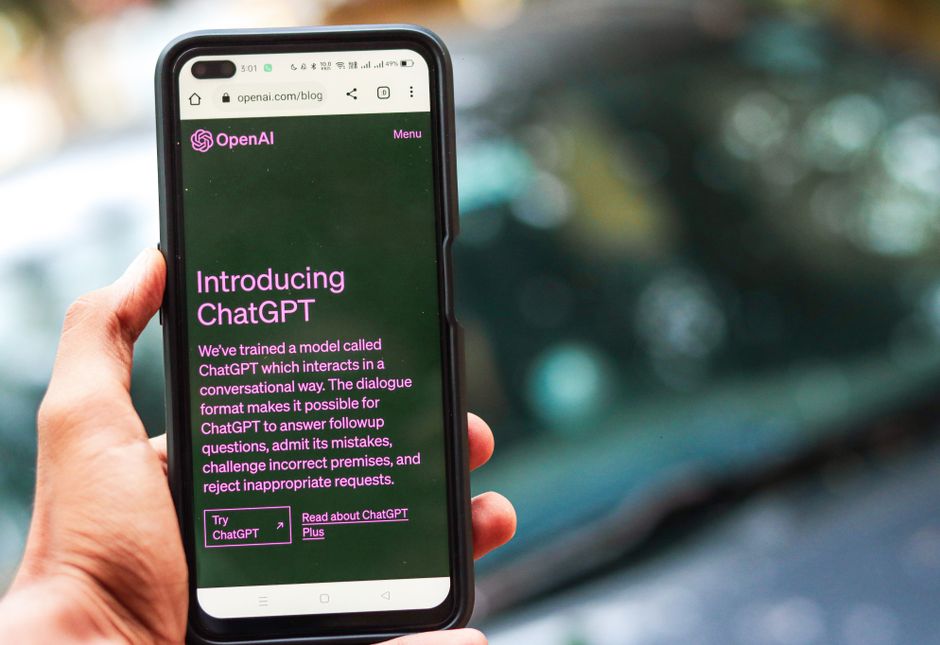
Recommendation: Define a baseline test matrix for each role and run automated checks before deployment. Build a small, deterministic suite of prompts that cover edge inputs and state transitions; automate result collection to track where outputs diverge. Keep attention on input formats and state transitions, and study how a role responds to a question with ambiguous intent. If you made a mistake, reproduce the prompt, capture the output, and log the discrepancy with the expected behavior. For each question, record how many prompts trigger boundary conditions and ensure outputs stay within the defined constraints and style. Use effective methods to test isolation and repeatability, and share findings with the team, indicating what improved settings you apply for future runs. Following this plan, respond clearly to requests and explicitly adhere to words and style responses according to the established style.
Edge Case Scenarios and Observability
Develop targeted edge-case bundles: sparse context prompts, conflicting role cues, and prompts that depend on multi-turn history, including in mobile contexts. For each case, craft a test that reproduces the scenario, capture the actual output, and measure alignment with the defined style and safety constraints. Increase observability by comparing results to a gold standard across several runs, and log any drift with the prompt, the state before, and the outcome. Enable logging before tests and use a lightweight replay engine to repeat tests on local devices or in mobile environments. If a response is incorrect, respond with a safe fallback and then adjust prompts or raise an issue for review. Specify exact input data, state before prompt, and words used in the response; share results with the team to support improvements.
Validation Metrics and Quality Checks
Establish a validation rubric with concrete metrics: coverage across role prompts, failure rate by edge category, and reproducibility across environments. Use targets such as at least 95% pass on baseline prompts, drift under 2% across builds, and testing in mobile contexts. Run tests in CI and present per-prompt results, time to respond, and adherence to the defined style. Include production prompts to verify real-world use and confirm responses stay within bounds. Document an improvement plan: capture changes, quantify impact, and specify where refinements apply. Following this methodology, you will be able to answer questions quickly and accurately, maintaining a consistent vocabulary style and coherence.
Deploy, Maintain, and Audit Custom Roles: Versioning, Safety, and Governance
Recommendation: establish a centralized role repository with a formal lifecycle, where every change is versioned, tested, and auditable before deployment.
- Versioning, Release, and Documentation
Define a semantic versioning scheme (major.minor.patch) and attach a version tag to every role manifest. Maintain documentation of changes in a centralized changelog and adhere to specified requirements of the project. Use a pull-request workflow with automated tests, and require approval from the project owner. For example, rolling back should be precise and auditable, reverting to the previous version with a recorded diff. The task is to keep track of who changed what, when, and why, so the community can review changes effectively. Ensure first releases follow a clear plan with milestones and a deprecation path.
- Versioning discipline: create v1.0.0, v1.1.0, etc., and deprecate old versions with a published sunset plan.
- Changelog: every release includes a concise summary of changes, backward compatibility notes, and any removed capabilities. The documentation should be precise and machine-readable.
- Documentation: maintain specified guidelines and a dedicated section in the project wiki describing deployment and rollback steps.
- Safety, Compliance, and Governance
Limit scope and enforce least privilege. Define guardrails that enforce constraints at runtime and during validation tests. Align with internal security policies and financial considerations where relevant. The role owner should be accountable, and governance bodies (community) conduct periodic reviews. The rationale for the policy should be clear, and the process should make it engaging by including concrete examples and story-like scenarios to illustrate potential misuse. Make the process appealing by providing transparent criteria and visible outcomes–this helps address concerns and keeps the team focused on key goals and expectations. Transparency is needed in managing changes and complying with specified requirements to reduce risk.
- Least privilege, scope, and denial-by-default.
- Runtime guardrails: automated checks, policy constraints, and fail-closed behavior.
- Ownership and approvals: assign a primary owner and a secondary reviewer for every role, with clear escalation paths.
- Audit, Monitoring, and Continuous Improvement
Implement an audit trail: who changed what and when; store immutable logs and provide export capabilities for external reviews. Monitor dashboards for violations, failed requests, and change frequency. Conduct interviews with role owners and collect feedback to validate that roles meet key objectives and expectations. Discuss financial risk and mitigation options, tying improvements to business outcomes. Use examples to illustrate how a rollback was executed, then plan further refinements in the backlog. The process should be reviewed by the team to continuously improve safety and efficiency.
- Audit logs: immutable, tamper-evident storage with export capability.
- Metrics: deployment frequency, mean time to recovery, change failure rate, access anomalies.
- Governance cadence: quarterly reviews, annual policy refresh, and documented post-mortems.
📚 More on AI Generation & Prompts
- How to Write an Effective Prompt for ChatGPT - A Practical Guide
- How to Write Prompts for ChatGPT and Other AI Models - A Practical Guide
- How to Use ChatGPT for Marketing - A Practical Guide
- ChatGPT Prompts for Account Based Marketing - A Practical ABM Guide
- Practical Guide - Using ChatGPT for SEO and Content Creation
Send a brief enquiry
Describe your website, goals, audience and budget so we can discuss a proposal.