The Complete Guide to Quick Commerce - A Holistic Approach


Build a lean, last-mile network with a diversified provider mix to reduce delays and boost accessibility. In a rapidly shifting demand landscape, map regional stock so unavailable items are minimized, and arrange bulk deliveries once a week where margins permit.
Focus: Niche SKUs with steady demand, paired with a user-friendly interface, boost accessibility and conversion rates while keeping stock lean. Once you identify core niches, push replenishment to match demand and reduce waste.
Adopt a hub-and-spoke model to ensuring timely deliveries, with transparent ETA and rates for different service levels. Use data to identify unavailable items quickly and reroute orders to nearby hubs. Provide a complete checkout experience with user-friendly search and filters.
Strategic expansion: Accessibility across channels, paired with transparent pricing, reduces friction for niche customers and expands the potential audience. A well-structured catalog enables bulk purchases by business clients while keeping consumer orders lean and fast.
This framework brings resilience to operations, ensuring that demand signals translate into reliable service, even as market conditions shift. By prioritizing last-mile efficiency, continuous provider collaboration, and a complete, user-friendly experience, teams can reduce unavailable stock, protect margins, and support sustainable growth.
Practical Roadmap to Building Your QCommerce MVP
Launch a five-week MVP sprint targeting one city and one high-demand category. Integrate payment gateways early (two options), enable same-day delivery via a trusted third-party logistics partner, and set margins targets from day one. Keep mind on unit economics, document decisions in a short author note, and share a roadmap for team alignment.
Structure spans three phases: Phase 1 onboarding merchants and catalog, Phase 2 order flow, payment, and distribution, Phase 3 optimization and scale. Use data signals to decide what to build next. Ensure operational readiness with a lean tech stack and seamless third-party integrations.
Distribution plan centers on in-city delivery, curbside pickup, and partner networks. Choose payment gateways with redundancy and a consistent checkout experience across channels. Align with vendors via standardized APIs, verify security, and maintain a list of core capabilities: inventory, pricing, checkout, and delivery.
Technical backbone emphasizes modularity: lightweight backend, microservices for payments, gateways, and distribution. Adopt a flexible architecture, integrate third-party providers, test end-to-end flows, and monitor error rates. Ensure increasing demand is met by scalable resources and the same user experience across touchpoints.
Commercial model and margins: define pricing structures, commissions, delivery fees, and optional subscriptions. Set margins targets and run sensitivity tests to forecast impact. Track status of each merchant segment, share results with stakeholders, and keep the author of each experiment accountable.
Go-to-market and support: on-board first merchants with a two-week pilot, gather feedback, and iterate quickly. Build a lightweight support channel, publish self-help content, and align with author-level owners for every feature.
Risk and governance: monitor third-party risk, ensure gateways uptime, implement fraud controls, and maintain data policies. Mind customer trust through clear terms and responsive refunds. Schedule quarterly reviews to adjust roadmap, growth targets, and operational priorities.
Define the MVP’s Core Offers and Assortment
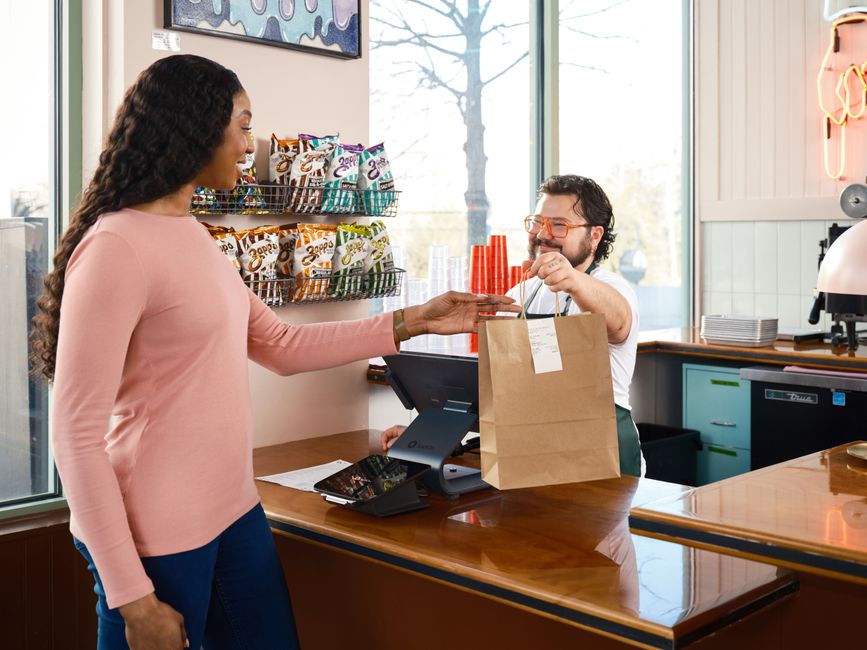
Recommendation: keep a lean, well, efficient set of 8-12 SKUs per high-demand category to achieve simplified operations and strong margins. Build a hyperlocal coverage model that targets items with fast speed from order to doorstep within a 1.5-3 km radius around micro-fulfillment nodes, ensuring busy periods are served without overstock. That focus from the start enables predictable economics and faster time-to-delivery.
Key rules for structure:
- Limit to 6-8 core items per category to keep the catalog wide yet manageable, enabling accurate forecasting and easier packing.
- Choose custom bundles and combos to raise average order value while maintaining margins and pricing transparency.
- Directly negotiate with top suppliers for core lines to reduce markup drift and improve reliability; maintain a managed catalog with clear pick paths.
- Keep coverage high by mapping micro-fulfillment nodes to zone demand, ensuring no gaps in popular items.
- Establish automated forecasting and feedback loops that adjust assortment automatically based on live sales, seasonality, and promotions.
- Design the packaging approach for speed and ease, using compact, carton-friendly formats; this reduces handling time and waste.
- Monitor economics and margins weekly, adjusting prices or substitutions to preserve profitability without sacrificing service level.
Each product should be defined by a minimal, modular attribute set to speed packing and picking.
Map Customer Journeys and Checkout Flows
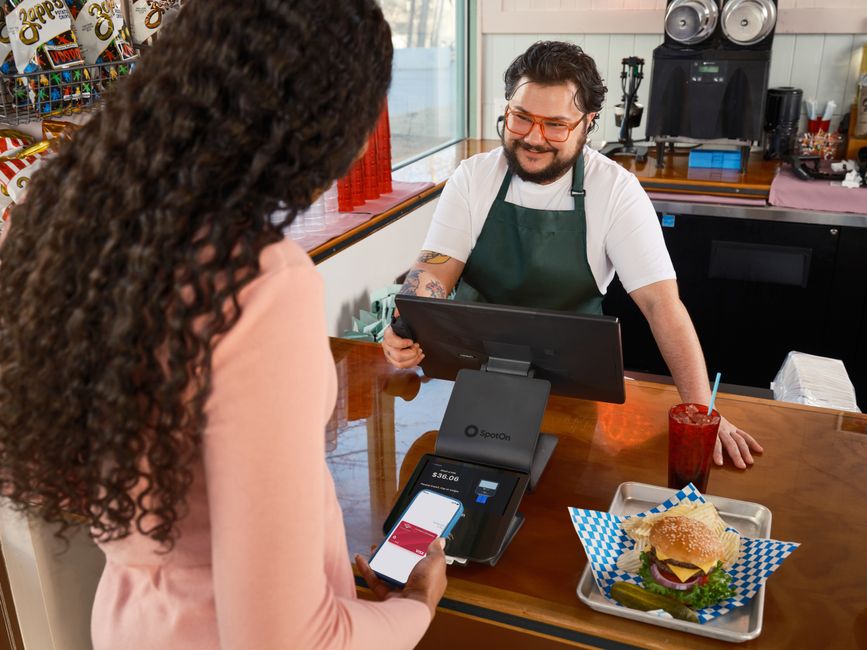
expert recommends consolidating touchpoints into a single, device-agnostic checkout flow and offering a frictionless path from search to purchase, especially for groceries, within 90 days to reduce cart drop-offs by 15%.
research maps reveal where friction occurs and how shopper demands shift by channel. utilize a unified system to trace the path from search to checkout, and within margins adjust the flow to shorten steps, boost completion, and improve stock visibility across stores.
model-driven roadmap focuses on the player at each phase and deploys a solution blueprint to launch features like autofill, address save, and expedited checkout, reducing taps and supporting a seamless transition from cart to payment with a trust-rich UI.
dark stores and physical locations must be synchronized via API-driven tech; ensure selection options show delivery windows, pickup, and in-store alternatives; use a single system to present consistent pricing and stock, fostering confidence and repeat purchases.
measure and iterate: youre team should monitor checkout conversion, add-to-cart rate, time-to-purchase, and margins by channel; run staged launches, capture feedback, and iterate within 30 days to accelerate growth and maintain trust across channels.
Select a Lightweight Tech Stack and Infra
Adopt a compact, modular stack: Node.js runtime, PostgreSQL for core data, Redis or Memcached for caching, deployed on a managed cloud with serverless or lightweight containers. This setup directly scales with demand, minimizes latency for customers and retailers, and supports grocery orders round-the-clock. Identify existing workloads and map them to distinct services to avoid overprovisioning. Target sub-100 ms end-to-end latency, 99.95% uptime, and capacity for 20k–50k concurrent sessions in peak windows.
Infra should emphasize gateways, network efficiency, and edge capability. Use gateways that terminate APIs near the user, cache hot data at edge, and route orders to the vehicle fleet. xpdel can optimize routing and handoffs, improving rates and reliability. For applications that run on mobile, web, or kiosk, keep data models simple and identified by domain to reduce coupling. Edge caching can cut origin fetch by 40–60%, lowering backend call rates.
Flexible deployment across network regions ensures vertical scale without duplicating logic. A single network can support multiple vertical marketplaces (grocery, pharmacy, logistics) without duplicating logic. Use a vehicle oriented routing service integrated with your order flow, so drivers receive stable ETA updates. Plan for 5–8 regional gateways and 2–3 failover regions to maintain uptime.
Compliance and security are non-negotiable: enable role-based access, audit trails, data residency controls, and privacy safeguards. Prefer gateways that provide OAuth, API keys, and scoped permissions; this yields predictable rates and protects customer data while keeping regulatory pressure manageable.
Applications should be composed of small, independent services with clear boundaries. Those identified services can be updated independently, reducing downtime and enabling experimentation with new uses cases. This makes retailers more responsive to demand shifts and helps capture additional advantages in the grocery segment.
Within deployment, prioritize lightweight databases, event-driven messaging, and durable queues. Use xpdel for last-mile coordination where possible, while ensuring gateways handle auth, retry logic, and idempotency so customer orders land correctly even in peak load. This approach keeps latency low, supports round-the-clock orders, and preserves customer experience across channels.
Set Measurable Launch KPIs and Benchmarks
Looking to accelerate momentum, set three KPIs upfront: leads by locations, checkout conversion rate, and expedited delivery share, strategically aligned with current needs, while looking at data across warehouses informing targets.
-
Leads by locations: baseline 2,400 weekly; target 3,800 by week 6; capture via checkout prompts, landing-page signups, and in-store QR prompts; data sources: CRM, POS, and in-app signals; deduplicate records; owner: regional growth lead; actions: run localized promos and optimized sign-up flows to boost entry points.
-
Checkout conversion rate: baseline 18%; target 26% by week 6; implement two A/B tests on checkout flow, guest checkout, address-field simplification, and promo codes; measurement: events in analytics platform; data quality: session data, cart items, and user IDs; owner: CRO lead; actions: iterate weekly and share learnings with experts for rollout decisions.
-
Expedited delivery share: baseline 0.5% of orders; target 6% by week 6; experiment with courier options, last-mile partners, and time-window choices; measure: orders with expedited tag divided by total orders; data from OMS and WMS; owner: ops lead; actions: test 2-3 zip codes per week; aim to lower investment while expanding coverage.
Average order value (AOV) and basket size: baseline $42; target
-
Average order value (AOV) and basket size: baseline $42; target $46 by week 6; promote cross-sell and curated selection; track by checkout line items; data: order histories in analytics platform; owner: merchandising lead; actions: implement up-sell prompts and optimized product selection to meet household needs.
-
Fulfillment accuracy and on-time delivery: target 98% on-time, <2% order errors; measure by fulfillment events from warehouse information and delivery confirmations; owner: logistics manager; actions: tune pick paths and staff training; weekly review with experts to adjust by location mix.
-
SKU selection coverage: ensure top 200 items meet 95% of demand within pilot set; monitor fill rate and stockouts by warehouses; data: WMS and ERP inventory data; owner: replenishment lead; actions: adjust assortment and supplier lead times; align mix with current needs across traditional and online channels.
-
ROI and investment efficiency: track incremental revenue per location and spend; target payback period under 12 weeks; data: ERP and CRM + marketing attribution; owner: finance and growth leads; actions: reallocate budget toward high performing locations, pursue lower investment for tests, and scale to top tier locations.
-
Response cadence: escalate underperforming locations within 7 days; measure: issues resolved within 48 hours; data sources: operational dashboards, CRM; owner: program manager; actions: weekly cross-functional reviews with experts to adapt tactics quickly.
Design a 4-Week MVP Backlog with Prioritized Features
Start with core order flow module to validate q-commerce viability within Week 1; prioritize features delivering first value quickly.
Picture a minimal storefront toolkit: catalog, personal accounts, checkout, monitoring. Include lightweight services, a simple toggle for enhancements, and addressing conditions affecting delivery window. Starting with small global footprint helps compare against legacy stores while keeping feedback fast and concrete. More value comes from tightening software layers rather than chasing perfection.
Starting from a clear prioritization framework based on impact and risk, address uncertainties, monitor window performance, and adjust scope accordingly. Set a 1-week window for review and replanning to keep pace. Each part of backlog ties to user value. This backlog uses clear API surfaces. Providing data-driven feedback loops supports ongoing improvements. Use a lightweight infrastructure that supports steady improvements and provides know-how to teams across websites and services. Teams know where to improve.
Feature Week Priority Scope & Rationale Metrics Core checkout &
| Feature | Week | Priority | Scope & Rationale | Metrics |
|---|---|---|---|---|
| Core checkout & order flow (q-commerce) | Week 1 | High | Include cart, persistent session, sandbox payment, order status updates; address conditions for payment success and inventory signals | Time to first order, cart-to-checkout rate, payment success rate |
| Catalog, picture assets, search | Week 1 | High | Include product data, image rendering, basic search and filters | Product render latency, search hit rate |
| User auth & personal data (addresses, profiles) | Week 2 | Medium-High | Include sign-in flow, saved addresses, basic personalization | New user sign-in rate, address save rate, session duration |
| Inventory signals & delivery window | Week 2 | Medium | Address conditions for availability, show delivery window, integrate with basic logistics | Inventory accuracy, delivery window accuracy |
| Payment gateway integration (sandbox to prod) | Week 1-2 | High | Include secure tokenization, retry logic, fallback | Txn failure rate, retry success |
| Monitoring & dashboards | Week 3-4 | Medium | Provide monitoring for latency, error rates; monitor infrastructure and services | Latency p95, error rate, monitor coverage |
| Infrastructure scaffolding & security basics | Week 4 | Medium | Address scaling, backups, access controls, feature toggles | Deployment frequency, MTTR |
Plan Pilot Testing and Feedback with Early Adopters
Start with a 14-day pilot in two store centers, engaging 25–40 participants, focusing on a compact package of 3 offers and 2 models. Capture data directly from source systems and apis, measure cash impact, and benchmark against known competitors to prove value faster.
Phases: Phase 1 configures decision engines, data integrations, and access controls; Phase 2 validates outcomes against baseline metrics. Use mapping to link checkout signals to offers and models, and embed security controls from day one.
Selecting core components: 2-3 dynamic offers, 2 modeling approaches, and direct fulfillment paths. Wire data from source systems to decision engines via apis; establish control points, and set known thresholds for risk and ROI.
Fostering faster feedback: create structured channels to capture qualitative notes and quantitative signals from early adopters, and apply lessons to fine-tune pricing, placement, and timing of offers. Keep privacy in mind and align with security constraints.
Data-driven transforming: monitor data across centers, track cash delta, average order value, and conversion; use known baselines to gauge ROI, and decide to accelerate implementation.
Post-pilot scaling: selecting additional centers, expanding data sources, leveraging apis for faster rollout, and applying learned mapping to drive efficient operations across store network; align implementation with security standards and maintain tight control while expanding.
Send a brief enquiry
Describe your website, goals, audience and budget so we can discuss a proposal.


